
Survey #79: Staff Sergeant, Paul Schwimmer
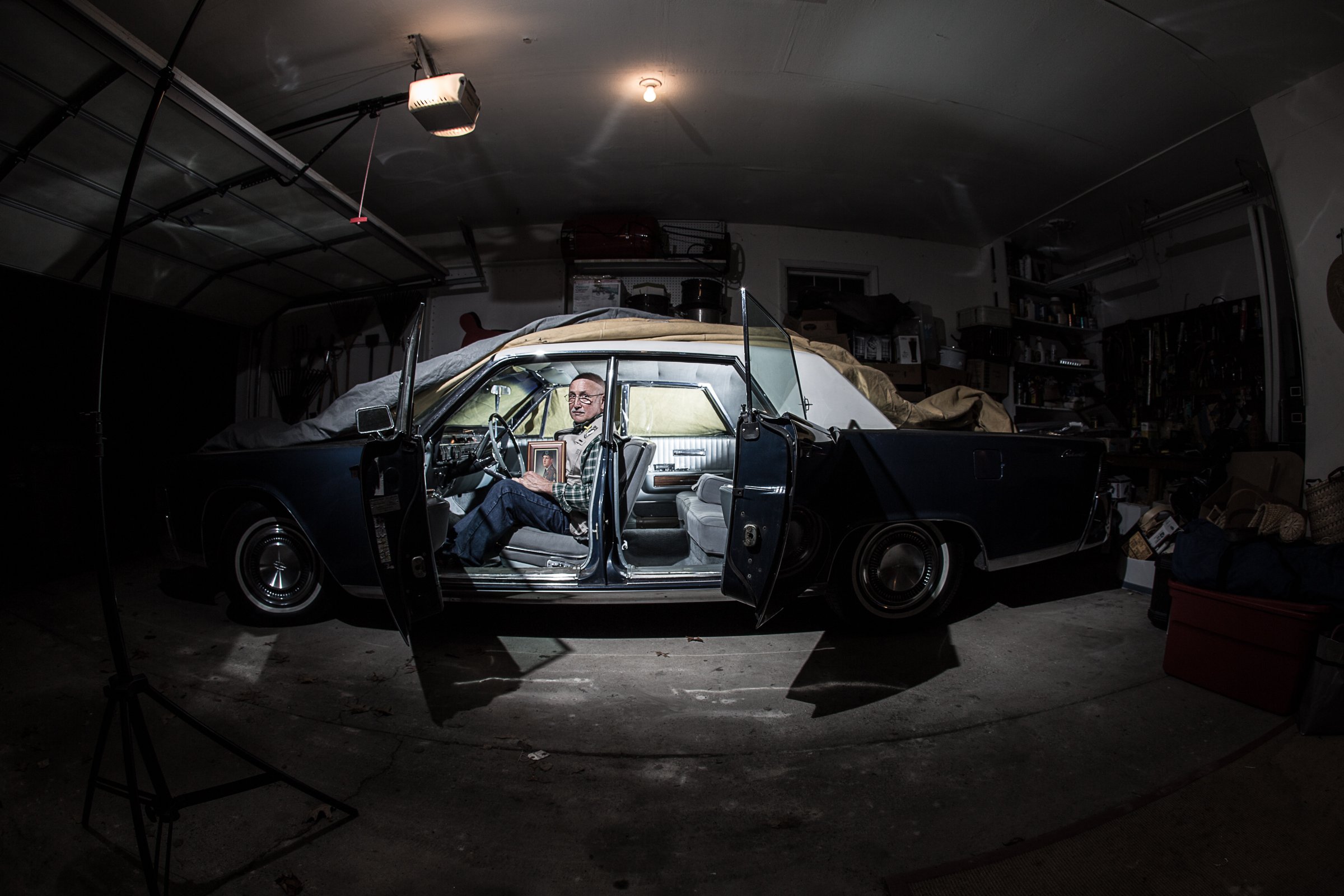
Staff Sergeant, Paul Schwimmer
United States Army | 12th Special Forces Group
Survey #79
For Paul Schwimmer, military service did not end when he took off his uniform. Decades after serving as an Army paratrooper and Special Forces team sergeant, he began traveling to former battlefields around the world, searching for American service members who had never returned home.
Schwimmer entered Special Forces training in 1968, during the Vietnam War. While many young men were looking for ways to avoid military service, he volunteered for one of the Army's most demanding assignments. Selection required both psychological and physical testing. He recalled that only a handful of candidates from a much larger group were chosen to continue.
He completed airborne training and became a team sergeant with the 12th Special Forces Group, serving on Detachment A-132, based in the Detroit area. His team trained to replace Special Forces units operating in Latin America if those soldiers were reassigned to Vietnam.
For six years, Schwimmer belonged to what his unit called the green team, a group maintained in a constant state of readiness. Members kept their equipment packed and prepared to deploy. His training included jungle operations in Panama, airborne exercises in Canada, and parachute jumps into forested terrain on Okinawa, where soldiers learned to descend through trees and rappel to the ground.
He remembers the intensity of the training and the confidence of the young soldiers who participated. They were expected to master unfamiliar environments, work independently, and remain prepared for assignments that might come with little warning.
Schwimmer eventually returned to civilian life and established a career as a surveyor. The technical skills he developed in that profession would later become central to an entirely different kind of military mission.
Years afterward, he became involved with Honor Flights, helping escort World War II veterans to Washington, D.C., to visit the memorials honoring their service. He participated as a volunteer guardian, assisting aging veterans throughout their journeys.
The experience brought him into close contact with men whose wartime experiences had occurred decades before his own service. He watched veterans visit the World War II Memorial, the Korean War Veterans Memorial, and the Vietnam Veterans Memorial. Their reactions left a lasting impression.
Through this work, Schwimmer learned about volunteer organizations searching for the remains of American military personnel still missing from earlier conflicts.
He immediately wanted to participate.
In 2009, he traveled to Palau in the western Pacific for his first recovery mission. The work took him to Peleliu, where American forces had fought a devastating battle against Japanese defenders in 1944.
The island's caves, ridges, and former defensive positions still contained evidence of the fighting. Schwimmer helped search these areas for human remains and unexploded ordnance.
His surveying background proved particularly valuable. Search teams needed to establish precise reference points, document discoveries, and identify locations that might otherwise disappear into the surrounding terrain.
In some caves, volunteers moved carefully through confined spaces, marking the locations of suspected human remains and dangerous military explosives. Schwimmer helped map the discoveries and, drawing on his military demolition training, assisted with the handling of unexploded ordnance.
The work demanded patience and precision. A fragment of equipment, a piece of an aircraft, or a small bone could provide the first evidence of a service member's location after decades of uncertainty.
Schwimmer later participated in underwater searches, using surveying methods and sonar equipment to identify possible aircraft wreckage. He understood that accurate positioning could make the difference between finding a target and spending days searching the ocean floor.
He eventually began volunteering with History Flight, an organization dedicated to locating and recovering missing American military personnel.
His assignments took him to Europe and the Pacific.
In Germany, Schwimmer participated in the investigation and recovery of a B-26 Marauder bomber lost during World War II. The aircraft had disappeared during fighting associated with the Battle of the Bulge and the Hürtgen Forest campaign.
The recovery team returned to the crash site with excavation equipment and carefully searched the wreckage. Schwimmer recalled the discovery of human remains emerging from the soil during the excavation.
According to his account, the mission ultimately contributed to the recovery and burial of six American airmen at Arlington National Cemetery.
For Schwimmer, discoveries like these carried responsibilities far beyond the excavation itself. The remains belonged to individuals whose families had lived for generations without knowing precisely what had happened to them.
His work also brought him repeatedly to Tarawa, in the Republic of Kiribati, where thousands of American Marines and sailors fought during a bloody amphibious assault in November 1943.
Schwimmer described excavations in which recovery teams uncovered multiple service members buried together. During one mission, he traveled to Tarawa after receiving photographs showing remains exposed in a trench. Within days, he was working alongside the archaeological team.
He also helped accompany surviving veterans back to the island where they had fought as young men.
Returning to the beaches with those veterans gave the recovery work an additional dimension. The men could identify locations, recall events, and describe experiences that had remained with them throughout their lives.
Schwimmer listened as they revisited places where friends had been wounded or killed. Their memories connected the physical evidence being uncovered to the individual lives behind the historical record.
The emotional demands of the work were considerable.
Although he had trained as a soldier, Schwimmer had not experienced combat himself. He initially resisted the idea that searching for the dead could produce its own psychological burden. Over time, however, he came to recognize the effect that repeated exposure to human remains and the circumstances of violent death had on him.
He sought help in processing those experiences and continued his recovery work.
His later missions also took him to Vietnam, where he assisted in efforts to locate missing American airmen. Even when individual searches encountered obstacles, he remained committed to the broader purpose.
Schwimmer's story connects two different forms of military service. The first required preparation for combat, physical endurance, and the discipline to operate under difficult conditions. The second demanded many of those same qualities, but directed them toward finding those who had been left behind.
His work has taken him across oceans and into jungles, caves, crash sites, and former battlefields. Each search begins with uncertainty, often with little more than historical records, witness accounts, and fragments of evidence.
For Schwimmer, the mission is ultimately about the people whose lives ended in those places and the families who have continued waiting for answers.
His service has become an effort to ensure that, even after generations have passed, the missing are not forgotten.