
Survey #73: E-4, Alejandro Valencia
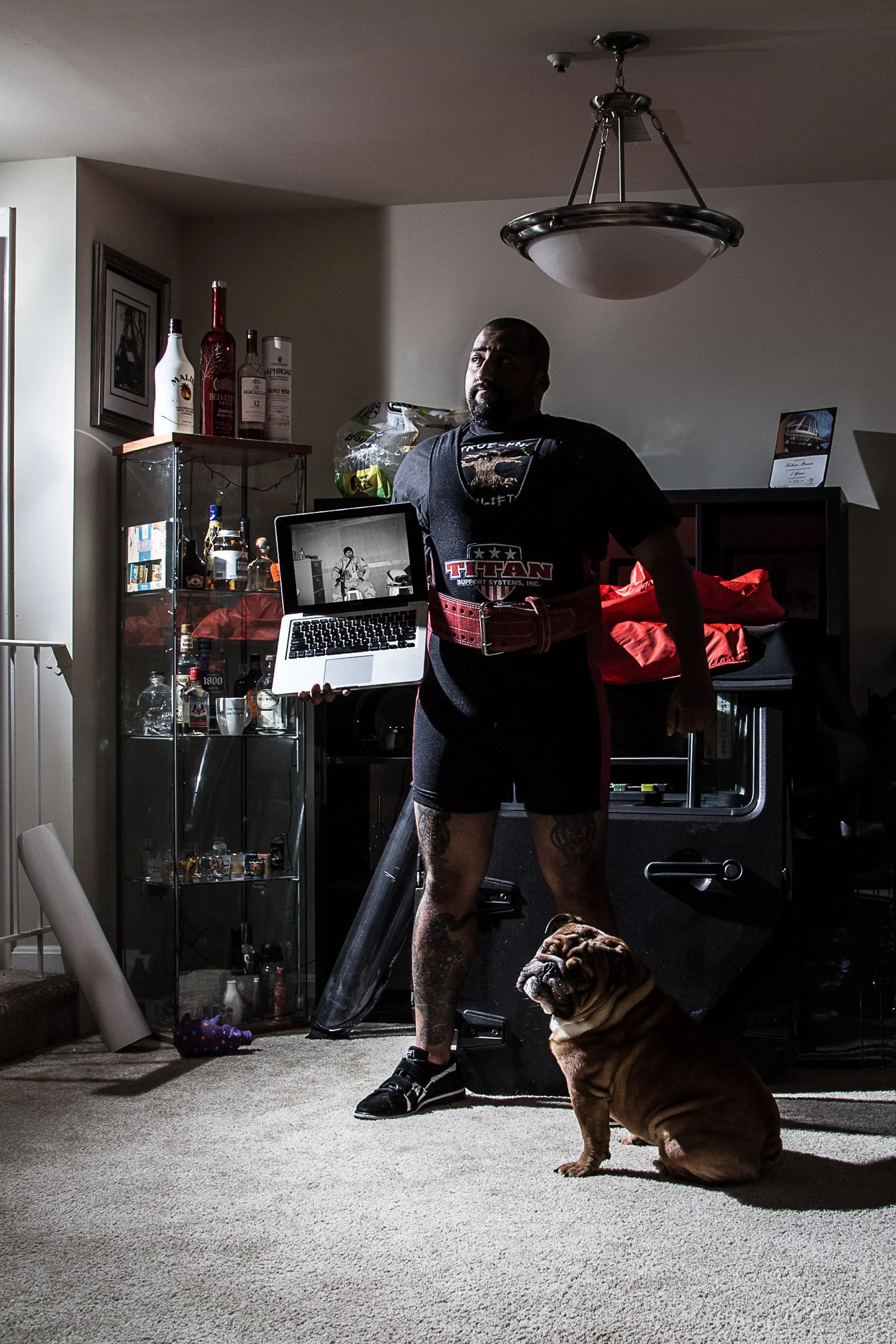
Alejandro Valencia
Survey #73 | Specialist, United States Army
Alejandro Valencia's journey into the United States Army began long before he put on a uniform. Born in Mexico, he came to the United States as a young child, grew up in poverty in Southern California, and spent his teenage years surrounded by circumstances that offered little reason to imagine a different future. By the time he enlisted at eighteen, he had left college after a year, was spending time with people whose activities were becoming increasingly dangerous, and had no clear plan for his life. The Army offered an escape from that uncertainty. It would eventually give him a profession, a sense of direction, and an understanding of life that he could not have anticipated when he first joined.
Valencia's family moved between Mexico and the United States during his childhood. He recalled first arriving in the United States when he was approximately two years old, returning to Mexico around age five, and coming back again when he was seven. He remembered crossing the border in January 1990, initially being apprehended by the Border Patrol during the day and returned to the Mexican side. His family tried again that night and entered the United States without authorization. They settled in Southern California, where Valencia spent the remainder of his childhood.
The family's financial circumstances were difficult throughout those years. Valencia described growing up well below the poverty line, often living with his family in a single room rather than having an apartment of their own. Housing was crowded, money was limited, and the ordinary comforts that many children take for granted were largely absent. He remembered a period shortly before his enlistment when his mother lost the apartment where they had been living. They moved into his aunt's house, where several families shared the available rooms. Valencia and his family slept in the living room.
At times, he estimated, as many as twenty-three people were living in the house. The arrangement lasted only a month or two before he left for the military, and Valencia remembered it without the sense of drama that someone unfamiliar with such circumstances might expect. Most of the residents worked or spent their days elsewhere, so the house was rarely filled with everyone at once except at night. To him, it was simply part of the environment in which he had grown up. He did not yet have much experience of how differently other people lived.
Valencia eventually obtained legal permanent residency through his father, who was already a resident. He estimated that he was about fifteen when his own residency was established. That status made him eligible to enlist in the United States military, even though he was not an American citizen. He would serve his entire military career as a lawful permanent resident and obtain citizenship in 2008, after leaving the Army. His path reflected a reality often overlooked in public discussions about immigration: noncitizens can serve in the American armed forces and make substantial contributions to the country before becoming citizens themselves.
When Valencia enlisted in June 2001, his motivation was not especially romantic or patriotic in the way military stories are sometimes presented. He said he joined largely out of boredom and because he had dropped out of college and was spending too much time getting into trouble with friends. He needed something different. The Army provided an opportunity to leave California, learn a skill, earn a living, and establish independence. At the time, he could not have known that the September 11 attacks would occur only months after his enlistment or that his military career would eventually take him to a surgical operating room in Baghdad.
Valencia trained as a surgical technician, completing approximately a year of military training before being stationed in the Washington, D.C., area in April 2002. The specialty placed him within military healthcare rather than a conventional combat unit. His daily responsibilities involved supporting surgical teams, preparing for procedures, and working in operating rooms. He found that military life, once basic training was completed, was in many respects similar to holding a civilian job. He had a place to live, a salary, a regular work schedule, and a profession that required increasingly specialized skills.
That professional training became one of the most important benefits of his service. Unlike military occupations that may have limited civilian equivalents, surgical technology offered a direct route into hospital employment after discharge. Valencia understood that the choice of specialty could determine how successfully a service member transitioned into civilian life. He encouraged others to consider what their military training might allow them to do after their service ended. For him, the Army did more than provide employment for six years. It gave him the foundation for a lasting career.
The move from poverty into military life also exposed Valencia to experiences he had never had growing up. He remembered going to a restaurant for the first time after joining the Army. At eighteen, he did not know what a waitress did or understand the custom of leaving a tip. He had missed many of the movies, cultural references, and ordinary social experiences familiar to his peers. Those gaps could be confusing and sometimes embarrassing, but he gradually learned. Military service introduced him not only to a profession but also to a wider world that had previously been beyond his reach.
During those years, Valencia was also navigating his identity as a gay man under the military's Don't Ask, Don't Tell policy. The policy remained in effect throughout his service and prohibited gay, lesbian, and bisexual personnel from serving openly. Valencia's experience was shaped in part by the medical environment in which he worked. He recalled that many gay people served in healthcare and that colleagues often understood more about one another's personal lives than they openly acknowledged. In his particular workplace, he did not experience the intense scrutiny or harassment that other gay service members had described.
Valencia was not formally out within the military, but neither did he describe himself as someone who constantly denied his identity. If a person asked directly, he sometimes acknowledged that he was gay, despite the restrictions of the policy. Outside work, living in Washington allowed him to participate in a gay social community. He developed friendships and went out without feeling that every aspect of his personal life was being monitored. His colleagues generally did not question how he spent his weekends. He recognized that his experience might have been different in an infantry or artillery unit, but within military healthcare he largely felt accepted.
His personal life nevertheless carried the consequences of family rejection. Valencia's parents divorced in 2002, and he described becoming estranged from his father after his father learned he was gay. The rejection involved religious objections and painful words that Valencia did not dwell on during the interview. His mother remained in California while he built his adult life in Washington. The distance between his family relationships and his growing independence formed another part of the transition he was experiencing. The Army gave him the means to support himself and establish a life that was no longer dependent on the approval or resources of his family.
In October 2005, Valencia deployed from Washington to Baghdad, Iraq. He remained there until October 2006, working as a surgical technician during one of the most violent periods of the Iraq War. His assignment placed him in an operating room where the consequences of combat and attacks on civilians arrived in immediate, physical form. The injuries included severe burns, gunshot wounds, broken bones, and traumatic amputations. He described seeing nearly every kind of injury that war could produce. For a young man whose military career had begun as a route out of poverty, the experience brought him face to face with suffering on a scale he had never imagined.
The operating room required Valencia and his colleagues to work with patients whose injuries were often catastrophic. Their responsibility was to stabilize the wounded, perform the necessary procedures, and prepare patients for transfer to other medical facilities. The work demanded concentration and technical competence even when the circumstances were emotionally overwhelming. There was little opportunity to dwell on one patient before the next arrived. The medical team had to remain focused on what could be done in the moment, regardless of the violence that had brought someone to the hospital.
One patient remained especially vivid in Valencia's memory. She was an Iraqi woman who had been shopping in a market when a suicide bomber attacked. Three of her children were killed. She was pregnant, and the unborn child also died after shrapnel struck her abdomen. Another fragment injured her neck, leaving her paralyzed. Valencia recalled that the surgical team had to make an extensive incision to remove the shrapnel and save her life. The operation was not intended to restore everything she had lost; it was an attempt to keep her alive long enough to receive further care.
Valencia found himself thinking about what would happen when the woman regained consciousness. She would awaken to devastating physical injuries and the loss of her children. She would be paralyzed, facing an uncertain future in a country whose medical and social resources had been severely strained by war. His team stabilized her and transferred her for further treatment, but they never learned what happened afterward. Valencia wondered whether she survived for more than a few days. He could not know. The uncertainty was part of the work: patients arrived, the surgical team did everything it could, and then they were gone.
The experience illustrates a dimension of military service that is often absent from familiar images of combat. Valencia was not describing an engagement with an enemy force or a tactical operation. He was describing the aftermath of an attack on civilians, seen from the perspective of someone responsible for keeping its victims alive. His service placed him among medical professionals treating the human consequences of war, including people who had no role in the conflict. The work required him to confront suffering without becoming unable to function in its presence.
He spoke about those experiences with a degree of emotional distance that he regarded as necessary. Memories of particular patients might return unexpectedly, but he believed he could not allow them to control his life. The events belonged to the past, even though they had shaped him. Rather than describing himself as permanently overwhelmed by what he had witnessed, Valencia emphasized the perspective it gave him. Seeing people lose their health, their families, and their independence changed the way he understood the problems of everyday life.
When he returned from Iraq in October 2006, Valencia knew he wanted to leave the military and continue his education. He completed his Army service in May 2007, having served from June 2001 through May 2007 and reached the rank of specialist. His deployment had clarified his priorities. He wanted a professional future in healthcare, and he understood that the training and discipline he had acquired could help him achieve it. The young man who had enlisted without a plan returned with a much clearer sense of where he wanted his life to go.
Valencia initially considered returning to California, but he found few employment opportunities there. In the Washington area, the situation was different. He recalled applying for hospital positions and receiving three interview opportunities within approximately two days. The skills he had learned in the Army were immediately useful to civilian employers. He remained in the Washington area, continuing to work in surgical healthcare and building the financial independence that had been so difficult to imagine during his childhood.
His professional ambitions did not end with surgical technology. Valencia pursued a nursing degree while maintaining an unusually demanding schedule. He worked full-time, often between forty and sixty hours a week, and continued training for powerlifting competitions for approximately nine or ten hours each week. At the same time, he took substantial college course loads. During his prerequisite studies, he recalled taking as many as seventeen credits in a semester. Nursing school brought additional classroom hours, clinical training, and study requirements. He completed the program with a grade point average of approximately 3.5.
He credited his military experience with teaching him how to manage those competing demands. Before enlisting, he had lacked direction and had little experience taking responsibility for everyday tasks. He remembered that he had never done his own laundry or cooked his own meals. The Army forced him to become independent, organized, and accountable. By the time he was completing nursing school while working full-time and competing in powerlifting, he had developed a level of discipline that would have seemed foreign to the teenager who had left California.
Powerlifting was another expression of Valencia's determination. He trained seriously, competed, and devoted substantial time to physical strength. He also enjoyed working on cars and listening to heavy metal music. Those interests mattered to him in part because they challenged the stereotypes people sometimes associated with being gay. He recalled that some physicians he worked with were surprised to learn his sexual orientation because he did not fit their expectations. Valencia understood himself as an individual whose interests, personality, and identity could not be reduced to a conventional image.
The change in his personality was not limited to discipline and ambition. Valencia believed he had become considerably more relaxed. Before military service, he described himself as someone who was frequently angry. After working in Iraq, he found that many of the frustrations of ordinary life seemed less important. He had witnessed people suffering devastating injuries, losing family members, and facing circumstances from which they might never recover. Returning to a safe home, a comfortable bed, air conditioning, and the companionship of his dog gave him a sense of gratitude that he had not previously possessed.
He spoke about the simple fact of waking up healthy, with his arms and legs intact and without the kind of chronic suffering he had witnessed in patients. Working in healthcare reinforced that perspective. Valencia did not claim that difficult experiences disappeared or that memories of Iraq had no effect on him. Rather, he believed those memories helped him recognize what was good in his own life. He considered himself happier because he had learned to distinguish between ordinary inconveniences and the kinds of losses that could fundamentally alter a person's future.
His understanding of the military was similarly grounded in personal experience rather than broad assumptions. Valencia recognized that the armed forces, like any large institution, contained people who behaved admirably and others who did not. He believed public perceptions were often shaped by the most extreme or troubling examples, which could obscure the everyday work of people serving responsibly. His own experience had been overwhelmingly beneficial, even though his deployment had exposed him to some of the worst consequences of war.
Valencia also brought a distinctive perspective to debates about immigration and military service. Having entered the United States without authorization as a child, later obtained permanent residency, served in the Army, and eventually become a citizen, he understood that the lives of immigrants did not fit neatly into political categories. He questioned why public discussions about Hispanic immigrants so often overlooked their contributions to the military. In his view, acknowledging that immigrants served the country could complicate narratives that portrayed them only as a burden.
His own citizenship came in 2008, a year after his military service ended. By then, he had already spent six years in the Army, including a deployment to Baghdad. He had cared for American service members and Iraqi patients, performed demanding medical work, and accepted the responsibilities of military life while remaining a noncitizen. His experience demonstrated that legal citizenship and service to the country did not necessarily begin at the same moment. For Valencia, the path to becoming an American included years of contributing to the nation through military healthcare.
The contrast between the life he left behind and the one he built became especially clear when he recalled his teenage friends in California. One memory involved driving toward Palm Springs with several people whose activities included drug use and firearms. He described people using methamphetamine inside the car while another carried guns and talked about intimidating someone. Valencia remembered being at the wheel, surrounded by behavior that could easily have led to violence, arrest, or serious injury. He believed that if he had remained in that environment, he might eventually have gone to jail.
The Army interrupted that trajectory. By the time of his interview, Valencia was living near Washington, D.C., with a good career, friends, a roommate he valued, a dog, and a new car. He was financially stable and had completed a nursing degree. These were not extravagant ambitions, but they represented a profound change from a childhood spent sharing rooms and sleeping on the floor of a crowded house. He had acquired not only material security but also the ability to make decisions about his own future.
Asked whether he would enlist again if given the opportunity, Valencia answered without hesitation that he would. He might make different educational choices, taking greater advantage of opportunities to attend school while still serving, but he did not regret joining. The military had changed the direction of his life so completely that he regarded it as one of the most important decisions he had made. Even the difficult deployment to Iraq had contributed to the clarity and perspective with which he approached adulthood.
Valencia's story is not a simple account of military service lifting someone out of poverty. It is also the story of a child who crossed a border without legal status, a young man who served a country before becoming its citizen, a gay soldier who navigated military policy without allowing it to define his entire experience, and a medical professional who witnessed the consequences of war at their most intimate and devastating. Each part of that history contributed to the person he became. The Army gave him opportunities, but it was his determination to use them that shaped the life he built afterward.
For Alejandro Valencia, the most enduring result of military service was a change in how he understood responsibility, possibility, and gratitude. He entered the Army as a young man without a plan and left with the skills and discipline to pursue a demanding healthcare career. His experience in Baghdad taught him to recognize the fragility of ordinary life, while his childhood gave him an appreciation for the independence he eventually achieved. His journey from a crowded home in Southern California to an operating room in Iraq and a professional life in Washington reveals a veteran whose service transformed not only his circumstances but also his understanding of what it means to live well.