
Survey #61: Brigadier General, Tammy Smith
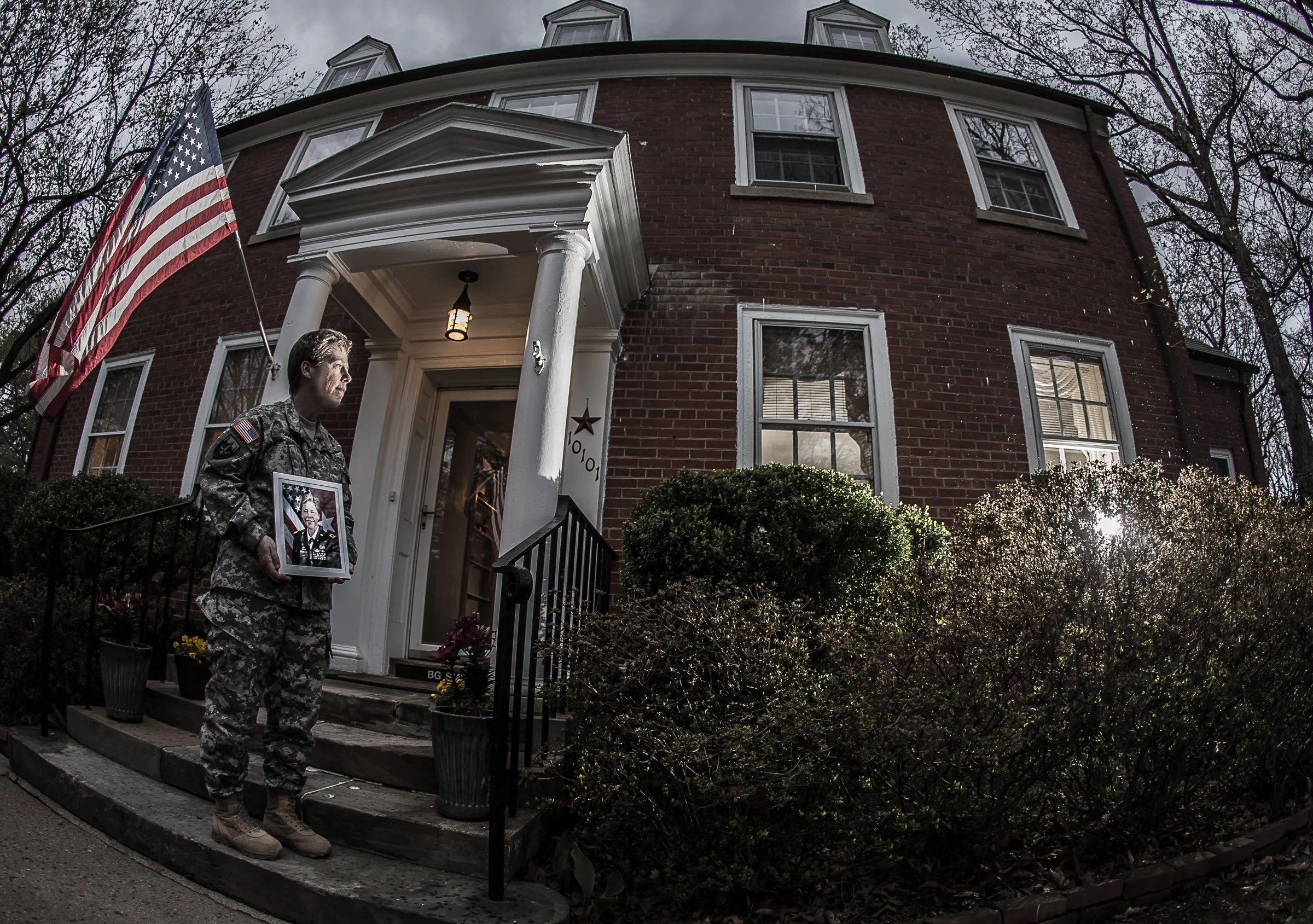
Tammy Smith
Survey #61 | Brigadier General, United States Army Reserve
When Tammy Smith joined the United States Army in 1986, she expected to serve four years, fulfill her obligation, and move on to another career. She had grown up in the small town of Oakland, Oregon, and wanted to attend college, but her family did not have the money to send her. While reading a Future Farmers of America magazine, she came across an advertisement offering information about Army scholarships. She requested the application, earned an ROTC scholarship, and attended the University of Oregon. What began as a practical solution to the cost of higher education became a military career spanning nearly three decades, culminating in her promotion to brigadier general and a place in American military history.
Smith entered active duty in 1987, beginning her career with an assignment in Panama. She remembered those early years as an exciting time to be a young officer. The United States was not yet engaged in the prolonged conflicts that would define much of the following generation's military service, and her assignment offered opportunities to travel and experience life outside the United States, including a deployment to Costa Rica. She discovered that she enjoyed the responsibilities of leadership and the sense of purpose that came with military service. Although she had initially planned to leave after completing her scholarship obligation, she remained on active duty, serving at Fort Jackson, South Carolina, and later at Fort Polk, Louisiana.
By 1996, Smith had served approximately nine years and was approaching a decision familiar to many career soldiers. Military retirement generally required twenty years of qualifying service, and officers who passed the halfway point often felt a strong incentive to remain. The Army was also undergoing reductions following the end of the Cold War, creating opportunities for officers to leave active duty. For Smith, however, another consideration was becoming increasingly difficult to ignore. She was gay, and the demands of concealing her personal life were growing more burdensome as she advanced through the ranks.
Smith had entered the military before the implementation of the policy known as Don't Ask, Don't Tell, but she would ultimately spend approximately twenty-five years serving under rules and institutional expectations that required her to conceal her sexual orientation. As she became a senior captain and approached eligibility for promotion to major, she feared that the visibility and personal relationships accompanying greater responsibility would make maintaining that secrecy increasingly difficult. She decided to leave active duty before reaching the ten-year mark, transferring to the Army Reserve so that she could continue serving while pursuing a civilian life in which she hoped to have greater personal freedom.
She returned to South Carolina and took a civilian contracting position at Fort Jackson. Although the work provided stability, she missed being a full-time soldier. She missed the leadership, the responsibilities, and even the experience of wearing the uniform. In 1999, when the Army Reserve expanded its Active Guard Reserve program, Smith applied for a full-time position and returned to active-duty service as a reserve officer. She would remain on continuous full-time military duty for the years that followed, eventually rising to one of the Army's highest ranks.
Throughout those years, Smith developed a method of protecting herself that she described as living a compartmentalized life. She carefully separated her professional identity from her personal relationships, limiting opportunities for colleagues to know her well enough to discover that she was gay. She maintained an unusually formal manner in the workplace, addressing fellow officers by rank and surname rather than first name, even when they were friends. Civilian colleagues received the same formality. She believed that this heightened professionalism helped create a protective distance, allowing her to build a successful military career without exposing the part of her life she feared could end it.
The consequences of that concealment extended beyond the practical difficulty of keeping a secret. Smith understood herself to be a capable officer and a person of integrity, yet she spent decades serving an institution whose policies communicated that people like her did not belong. She did not accept that judgment, but she could not entirely escape its effects. Over time, the necessity of hiding became so deeply ingrained that she began to anticipate rejection even in circumstances where no one had expressed hostility toward her. The military had given her a profession she loved, opportunities to lead, and a strong sense of identity, while simultaneously requiring her to conceal an essential part of herself.
Smith also encountered barriers because she was a woman in a profession that remained heavily dominated by men. Looking back on her early career, she recognized instances of discrimination that she had not fully understood when they occurred. As a young officer, she had believed that training alongside men meant that sexism was no longer a significant obstacle. With experience, she came to recognize the opportunities she had been denied and the assumptions that had shaped how others treated her. She considered those barriers especially difficult because her gender, unlike her sexual orientation, was visible to everyone.
One experience from the mid-1990s remained particularly vivid. While serving as a captain at the Joint Readiness Training Center, Smith was already performing duties associated with identifying helicopter landing and pickup zones and supporting airborne operations. When Army regulations changed to allow women to attend Pathfinder School, she asked her commanding officer for permission to enroll. The specialized training would have directly supported the work she was already performing. Her commander refused, telling her that women did not attend Pathfinder School. Smith explained that the rules had changed and that female soldiers were now eligible, but he repeated his refusal. She understood that his objection was not about her qualifications or the demands of the course. It was about preserving an area of military expertise that he regarded as belonging to men.
Smith did not challenge the decision further. As a captain addressing a lieutenant colonel in that era, she saw no realistic avenue for appealing the refusal. Years later, she could identify the incident as discrimination, but at the time she simply continued doing her job. She observed that women often learned to adapt to such barriers and succeed despite them, sometimes recognizing the injustice only after gaining enough distance to understand what had happened.
The defining turning point in Smith's personal and professional life came in September 2011, when the repeal of Don't Ask, Don't Tell took effect. For the first time in her military career, she could acknowledge her sexual orientation without fearing that doing so would end her service. She and her longtime partner, Tracy, married in a ceremony at the Jefferson Memorial in Washington, D.C., with people from their lives present. The change brought an enormous sense of relief, but Smith did not immediately become publicly outspoken about her marriage. After twenty-five years of concealment, the habits she had developed could not be discarded simply because the rules had changed.
In May 2012, Smith learned that she had been selected for promotion to brigadier general. The news brought both professional recognition and an unexpected personal crisis. General officers occupy highly visible positions, with demanding schedules, public responsibilities, and staff members who help manage aspects of their daily lives. Smith realized that continuing to conceal her marriage would become increasingly difficult. More importantly, she recognized that she no longer needed to hide. Nevertheless, the prospect of publicly acknowledging Tracy as her wife during the promotion ceremony challenged everything she had trained herself to do for a quarter of a century.
Smith and Tracy decided that they would approach the promotion as any other military family would. Tracy would participate in the ceremony as Smith's wife, not as a friend, roommate, or colleague. Their parents would attend, and the family would be recognized openly. Because of the timing, Smith became the first openly gay general or flag officer in the United States military to publicly acknowledge her same-sex spouse. She was careful to explain that she did not believe she was necessarily the first gay person to reach that rank. Rather, she was the first to make her family publicly visible in that position.
The prospect frightened her. Smith had spent years imagining the consequences of being discovered, and she anticipated hostility, rejection, and public humiliation. She experienced a panic attack the night before the ceremony and needed support from people close to her to prepare for what was coming. She was also concerned that the attention surrounding her sexual orientation might overshadow the military achievement itself. In the Army, she explained, leadership is understood as service to others rather than an opportunity for personal recognition. She wanted to acknowledge her family without making the occasion seem self-serving.
Smith and Tracy decided to tell their story through a single interview before the promotion. They chose Stars and Stripes, the newspaper serving the military community, because they wanted the story to be understood within the context of military life. Their intention was not to present themselves primarily as representatives of a political or social cause, but as a military family whose circumstances happened to be different from those of many other families. They wanted to explain their experience in their own words rather than allow others to define it for them. The interview was published shortly before the ceremony, making their relationship public as Smith prepared to receive her new rank.
The reaction was overwhelmingly positive. The promotion attracted national and international media attention, and Smith was interviewed by National Public Radio shortly afterward. She had expected angry letters and personal attacks, but instead received congratulations and messages of appreciation. At her first Pentagon meeting following the promotion, she noticed people turning to look when she introduced herself. She initially feared that their attention reflected the judgment she had anticipated for so long. When the meeting ended, however, many approached her to shake her hand, congratulate her, and thank her for being open about her family. Some spoke about gay relatives serving in the military; others simply wanted to express their respect.
Smith also began receiving messages from gay service members who saw her visibility as evidence that they, too, could have a future in the military. Some sought advice, while others wanted only to thank her. She was struck by the absence of the direct hostility she had expected. Although negative comments appeared in online discussions, she did not experience the personal campaign of rejection she had imagined. Tracy, however, sometimes became the target of hostile remarks in those discussions. Smith believed that even some people who opposed gay military service were reluctant to attack a newly promoted general because they respected the institution and the achievement represented by her rank.
The public acceptance did not immediately resolve Smith's internal struggle. In the days following her promotion, she described feeling authentic for the first time, but with greater reflection she came to distinguish between honesty and authenticity. She had been honest about her marriage during the ceremony, yet she was still conditioned to behave as though Tracy needed to remain invisible. In her promotion remarks, Smith recognized Tracy's presence and participation but failed to mention her by name. Tracy later pointed out the omission. Smith realized that she had spent so many years avoiding references to her personal life that she had unintentionally excluded the most important person in it from one of the most significant moments of her career.
The same habit followed her into everyday interactions. When she and Tracy entered a room together, Smith sometimes failed to introduce her, not because she wanted to deny their relationship but because the instinct to conceal it remained automatic. They discussed those moments openly, treating them as opportunities for growth rather than sources of conflict. Over time, Smith became more comfortable speaking naturally about her wife. She came to understand that honesty involved telling the truth, while authenticity required reaching a deeper level of comfort with who she was. The law and military policy had changed quickly, but the personal adjustment required time.
Smith's growing visibility also created opportunities to speak about military service, leadership, and inclusion. She was frequently invited to address audiences during Pride observances and other diversity events, including events at major military installations. At Fort Hood, Texas, she spoke during an installation-approved Pride observance, an occasion she regarded as significant because it demonstrated how the military community was beginning to recognize experiences that had previously remained hidden.
Another event at Los Angeles Air Force Base illustrated both the opportunities and complications that accompanied her public role. Smith had been invited to speak at a diversity day featuring presentations, cultural displays, food, and performances representing different communities. The base's senior commander initially assumed she had been invited because of her professional expertise in organizational leadership and human capital management. Smith explained that she generally spoke about her experience as the first openly gay general and decided to give that presentation to the assembled airmen and civilian employees. The audience, many of whom had not expected to hear such a personal account, responded with a standing ovation.
The event later attracted an attempt at controversy because a group of professional drag performers had been included in the day's entertainment. A photograph of the performance circulated, and a reporter sought to connect it with Smith's presence as a speaker. Smith recalled that the story gained little traction. To her, the experience reinforced the importance of telling personal stories in a way that allowed people to recognize the individual rather than rely on assumptions or stereotypes. Her account of military service was not fundamentally different from the experiences of other veterans who had faced obstacles, made sacrifices, and worked to build meaningful lives.
By the time Smith sat for her Conduct Becoming interview in 2015, she had served approximately twenty-nine years. She and Tracy were living in military housing at Fort Belvoir, Virginia, where Smith was serving as a brigadier general in the Army Reserve. For Smith, the house itself had become a symbol of how much had changed. After decades of keeping her personal life separate from her military career, she could now live openly with her wife in a military neighborhood. Tracy could participate in military spouse activities, and they could move through the community as a family without explanation or concealment.
The significance of that ordinary domestic life was difficult to overstate. Smith had spent most of her career believing that acknowledging her family could cost her the profession she loved. Now, near the end of that career, she was living in a home provided through the same military institution, surrounded by neighbors and colleagues who recognized her family as part of the community. What might have appeared unremarkable to another officer represented, for Smith, the culmination of nearly three decades of service and personal struggle.
When asked how being a professional soldier had shaped her character, Smith described military service first and foremost as a privilege. She believed that Army values had become inseparable from the way she approached both her professional responsibilities and her private life. The standards she followed while commanding soldiers, conducting training, or participating in military meetings were the same standards she tried to uphold at home and in her relationships. She did not see her identity as a soldier and her identity as a person as separate things, even during the years when she had been forced to conceal part of her life.
That understanding helped her reconcile the years she had spent hiding with the freedom she eventually gained. Her values had not changed when Don't Ask, Don't Tell was repealed, nor had her commitment to the Army or her ability to lead. She had been the same capable, dedicated officer before her marriage became public as she was afterward. What changed was the institution's willingness to recognize her family and her own ability to accept that recognition without fear.
Tammy Smith's story is not simply about becoming a general or being the first openly gay officer to reach that level of public visibility. It is about the complicated relationship between service, identity, and belonging. For twenty-five years, she served an institution she loved while believing that full honesty about her life could end her career. She learned to protect herself through discipline and distance, then had to learn how to set those protections aside when they were no longer necessary. Her experience reveals that changes in policy, however important, do not immediately erase the personal consequences of years spent living under those policies.
In the end, Smith found the clearest expression of her achievement not in the publicity surrounding her promotion but in the ordinary life she and Tracy were able to share at Fort Belvoir. Their home represented the recognition she had once believed impossible: that she could be a soldier, a general, a wife, and a member of a military family without having to choose between those identities. After nearly three decades of service, she had reached a place where her commitment to the Army and the truth of her personal life could finally exist together.