
Survey #51: Major, Paul Shannon
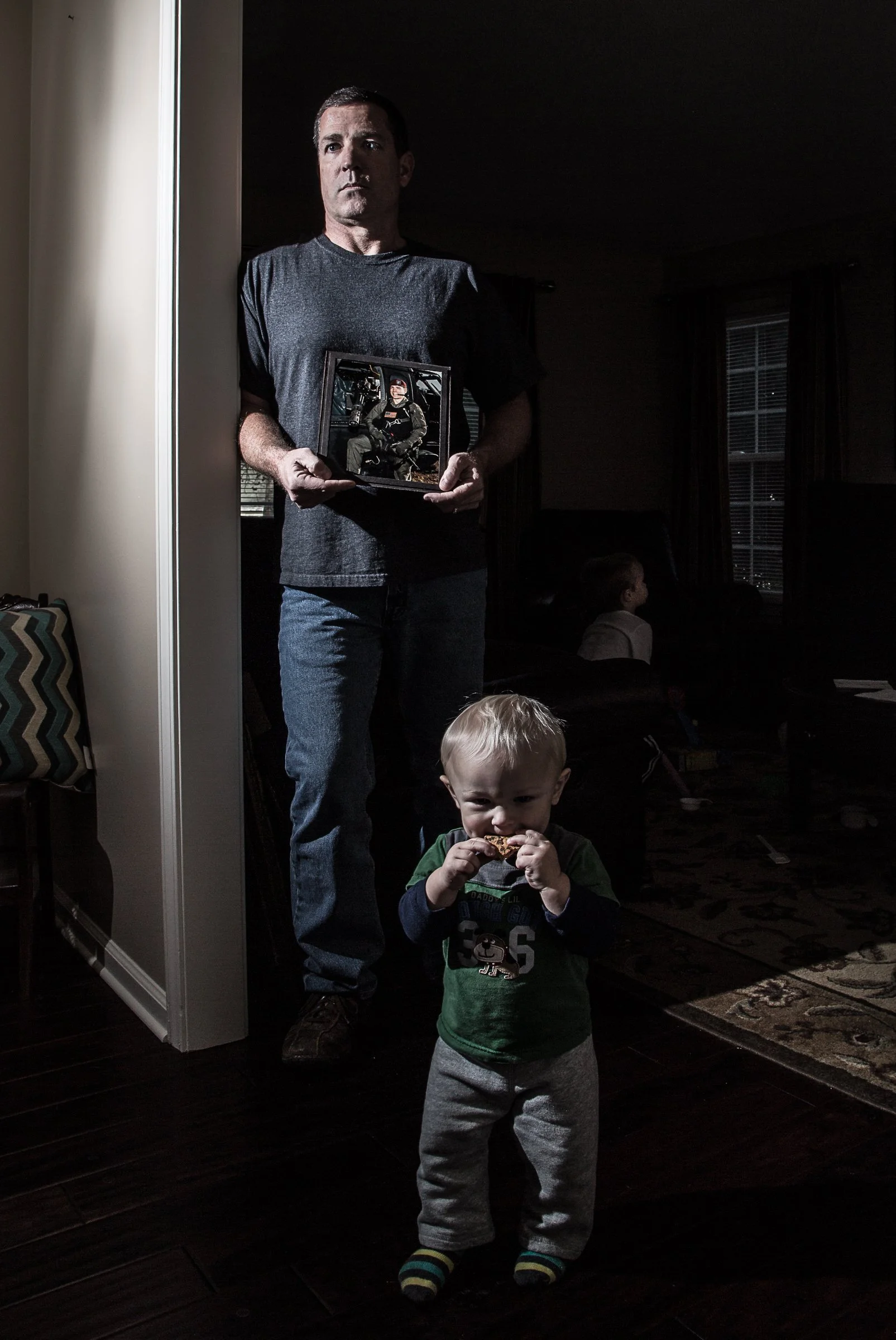
Paul Shannon
Survey #51 | Major, Tennessee Army National Guard | U.S. Army Veteran
Paul Shannon joined the United States Army on July 3, 1986, barely a month after graduating from high school. He had grown up in California and worked as an electrician's apprentice before enlisting. At the time, he had little idea how far military service would take him or how profoundly the decisions he made along the way would shape the rest of his life. Over a military career spanning nearly two decades, Shannon would serve in some of the most demanding operations undertaken by American forces, survive the Battle of Mogadishu, and eventually command nearly two hundred soldiers in Iraq. Yet when reflecting on his service, he returned repeatedly to the people he had served alongside, the decisions he had made, and the responsibilities that remained with him long after the fighting ended.
Shannon completed basic training at Fort Dix, New Jersey, and continued to Fort Eustis, Virginia, where he learned to maintain UH-60 Black Hawk helicopters. His first assignment took him to Fort Campbell, Kentucky, with the 101st Airborne Division. From there, he deployed to South Korea, where he spent fifteen months and transitioned from aircraft mechanic to Black Hawk crew chief. He remembered Korea as an opportunity to experience a world far beyond the one he had known. Young and single, he explored the mountains, traveled whenever possible, and immersed himself in the local food and culture. Military service had opened a world of possibilities, but Shannon had a particular ambition: he wanted to join the 160th Special Operations Aviation Regiment.
Known as the Night Stalkers, the 160th provided specialized aviation support for some of the military's most demanding operations. Shannon had attempted to transfer into the regiment before his assignment to Korea, but deployment orders repeatedly interfered with his plans. At one point, he seriously considered leaving the Army and returning to California to resume his work as an electrician. Then he was promoted to sergeant, earlier than he had expected, and decided to remain in the service. He reenlisted, arranged to return to Fort Campbell, and approached the 160th again. This time, a senior noncommissioned officer remembered him and helped secure his transfer. It was a decision that would place Shannon at the center of several major American military operations.
Only months after completing his initial training with the regiment, Shannon received an unexpected recall on a cold December evening in 1989. He was at home with his girlfriend, enjoying champagne beside a Christmas tree and a fire, when his pager sounded. Within hours, he was aboard a military transport aircraft, uncertain of his destination. When the aircraft landed and its enormous front cargo door opened, a wave of tropical heat rushed inside. Shannon and the other soldiers, still dressed for winter weather, discovered they had arrived in Panama. The United States had launched Operation Just Cause, and Shannon's unit was participating in operations against key targets during the effort to remove Manuel Noriega from power. For Shannon, Panama was his first direct experience of the speed and demands of special operations aviation. He had entered the regiment because he wanted to be part of that work, and the experience confirmed that he had found his place.
By 1993, Shannon was married, and his wife was expecting their son. The humanitarian crisis and growing conflict in Somalia had become a prominent international concern. American and United Nations forces were attempting to deliver assistance amid violence involving armed factions and competing warlords. Shannon's unit had been preparing for operations there, and when the call came, he deployed to Somalia with the 160th Special Operations Aviation Regiment. Over approximately three months, he participated in a series of missions supporting American special operations forces. Six major missions were completed without the loss of an aircraft or serious injuries among his crew. The seventh would become one of the most widely remembered military engagements of the era.
On October 3, 1993, American forces launched an operation in Mogadishu intended to capture senior figures associated with Somali faction leader Mohamed Farrah Aidid. Shannon was serving as a door gunner aboard a Black Hawk helicopter, part of the aviation force providing protection for troops operating on the ground. His aircraft carried members of the special operations team, including snipers Gary Gordon and Randy Shughart. The mission began with helicopters inserting ground forces into the target area. Shannon's aircraft then circled overhead, helping protect the soldiers below against armed opposition. His responsibility was to engage threats that ground personnel could not safely reach, while other crew members monitored approaches to the target, watching for vehicles and armed reinforcements. The helicopters operated in overlapping circles, attempting to maintain a protective perimeter around the mission.
The volume of incoming fire was intense. One Black Hawk, known by its call sign Super 61, was struck by a rocket-propelled grenade and crashed. Both pilots were killed, and other crew members were injured. A rescue effort began almost immediately, but the situation continued to deteriorate when another helicopter, piloted by Michael Durant, was also struck and crashed in a separate location. Shannon's crew moved to protect Durant's crash site while ground forces attempted to reach the survivors through the streets of Mogadishu. The streets were difficult to navigate, and the rescue vehicles repeatedly encountered armed resistance. From his position in the helicopter, Shannon could see the danger increasing around the downed aircraft.
During the fighting, a bullet struck Shannon's left wrist. His hand became nearly unusable. He could not grip or control the powerful minigun he had been operating, and attempting to fire it caused severe pain. Another member of the crew, Brad Hallings, took over Shannon's weapon. Shannon moved to a different position, where he could continue firing with his uninjured hand. Despite his injury, he remained aboard the aircraft as the crew continued its mission, circling above the crash site while American forces struggled to reach the wounded men below.
At Durant's crash site, the situation was becoming increasingly desperate. The wounded crew members were isolated, and ground forces were unable to reach them quickly. Gary Gordon and Randy Shughart volunteered to be inserted near the downed helicopter to provide medical assistance and protection. Shannon's aircraft descended to release them, but the first attempt was disrupted by debris thrown into the air by the helicopter's rotor wash. On the next approach, the aircraft hovered several feet above the ground. Gordon jumped, followed by Shughart, whose safety tether had not been disconnected. Instead of reaching the ground, Shughart was left hanging beneath the helicopter.
Shannon instinctively tried to pull him back inside, but with one hand already disabled by the gunshot wound, he could not lift the heavily equipped soldier. He drew his knife, showed Shughart what he intended to do, and cut the tether. Shughart dropped to the ground, stood, and signaled that he was all right. The helicopter climbed away, leaving Gordon and Shughart to reach Durant's crash site, where they attempted to protect the survivors. Both men were subsequently killed and were posthumously awarded the Medal of Honor for their actions. Shannon had witnessed their decision to go down into the fighting, had helped place them on the ground, and would carry the memory of those moments for the rest of his life.
As the battle continued, Shannon remembered rocket-propelled grenades streaking through the air and the distinctive sound they made as they passed the helicopter. The pilot increased speed and maneuvered more aggressively in an attempt to avoid the incoming fire, but eventually a rocket struck the aircraft. The explosion caused catastrophic damage. Hallings suffered a devastating leg injury, while Shannon was struck by fragments in his arm and face and briefly lost consciousness. The blast damaged the helicopter's landing gear, affected its rotor system, and disabled one of its two engines. Inside the aircraft, smoke filled the cockpit, and one of the miniguns began firing uncontrollably after its electrical system was damaged. The crew struggled to control the weapon, tend to the wounded, and keep the helicopter airborne.
For a moment, Shannon believed they would become the third Black Hawk to crash in the city. He understood what that might mean. Two aircraft were already down, rescue forces were stretched thin, and armed fighters were converging on the crash sites. The pilot initially searched for a place to make a controlled crash landing, but as the damaged helicopter descended, he discovered that it still had enough power to remain airborne. The aircraft continued toward the coast, flying low and shaking violently. Shannon feared they might have to ditch in the water, but the pilot located an open area at the port and attempted a running landing. With one side of the landing gear destroyed, the helicopter struck the ground at an angle and slid across the pavement toward a wall of stacked shipping containers. It stopped before reaching them.
The crew had survived, but their ordeal was not over. They immediately began treating Hallings, applying a tourniquet and working to control his bleeding. Another helicopter arrived to evacuate the wounded. In an extraordinary coincidence, the aircraft that came to retrieve Shannon was the same Black Hawk he and a fellow crew member had been repairing earlier that day. Before the mission, they had been replacing its engine, but because the work was not finished when the operation began, they had taken a spare aircraft instead. Later, as the battle escalated and available helicopters became scarce, maintenance personnel completed enough of the work to return the original aircraft to service. It was that helicopter that carried Shannon and Hallings to medical care.
Shannon was evacuated through the military medical system. Hallings ultimately lost his injured leg. The battle also claimed the lives of men Shannon knew personally, including crew members aboard Durant's helicopter. Durant survived the crash but was captured and held prisoner before eventually being released. For Shannon, the events of October 3 were not simply a military operation or the subject of the film Black Hawk Down, which would later bring the battle to a worldwide audience. They were the deaths and injuries of men he had served beside, moments he could remember in extraordinary detail, down to the positioning of aircraft, the movements of individual crew members, and decisions made in seconds. They were also moments he would continue to reconsider for decades.
Shannon's military career did not end in Somalia. He continued serving, eventually becoming an officer and reaching the rank of major in the Tennessee Army National Guard. During a deployment to Iraq in 2004–2005, he commanded a company of approximately 192 soldiers. The responsibility was different from his earlier role as a helicopter crew member. As a commander, Shannon was responsible not only for completing missions but also for the lives and welfare of the soldiers under his command. He understood that his decisions could determine whether those soldiers returned home, and he took that responsibility personally.
One incident from Iraq remained particularly painful. Members of his company were assigned to support work at the Al Muthanna chemical weapons storage complex, where facilities containing remnants of Iraq's former chemical weapons program required periodic inspection and security. The mission involved moving heavy engineering equipment along a paved road outside the company's usual operating area. Unknown to Shannon and his soldiers, the road had not been routinely patrolled for some time, and an explosive device had been concealed beneath the pavement. As the convoy returned, the device was detonated beneath one of its vehicles. Two soldiers ultimately died from the attack. Another, David Thomas, lost a leg, while a fourth suffered injuries associated with the blast.
Shannon learned of the attack through communications from the convoy and immediately began coordinating medical evacuation and additional security. The distance, poor communications, and complicated command boundaries made the response difficult. At the military hospital, Shannon learned that one of the wounded soldiers, Victor Lawrence, had died despite efforts to save him. He asked hospital personnel to allow the surviving members of the unit to see Lawrence and say goodbye. They agreed, giving the men an opportunity to acknowledge their loss together. The surviving convoy later encountered another explosive device while returning to base. Although no additional soldiers were injured, the incident intensified the danger of the recovery operation. Shannon traveled out to meet the convoy and bring the soldiers home.
David Thomas was evacuated for medical treatment and eventually recovered at Walter Reed Army Medical Center. After the deployment, Shannon and his first sergeant visited him there, and Shannon maintained contact with Thomas in the years that followed. The deaths in Iraq affected Shannon differently from the losses he had experienced in Somalia. As a young crew member, he had been one of many soldiers participating in a dangerous mission. As a company commander, he carried responsibility for the entire unit. He had deployed with 192 soldiers and wanted to return with all 192. That did not happen, and the experience stayed with him.
In his interview, Shannon reflected on the burden of command and the difficulty of making decisions when information is incomplete. He understood that leaders could not anticipate every danger, but he also knew that decisions made under pressure could have consequences that remained long after a mission ended. His thoughts often returned to Somalia. Years after the battle, he still wondered whether his crew might have attempted a different rescue method at Durant's crash site. He remembered that the Black Hawk carried collapsible rescue ladders and considered whether the wounded men on the ground might have been secured to those ladders and lifted away beneath the aircraft. The idea had not been proposed during the battle.
Shannon did not claim that such a rescue would have worked. Hovering over the crash site might have exposed the helicopter to even greater danger, and an attempted evacuation could have resulted in additional casualties. He knew there was no way to determine what would have happened. Nevertheless, he continued to question why the possibility had not occurred to him at the time. He distinguished between circumstances beyond his control and decisions in which he might have had some influence. The latter were the ones he found hardest to put aside. Even more than twenty years after the battle, he could still picture the crash site, the injured men below, and the equipment aboard his aircraft that might have offered another possibility.
When asked how military service had shaped his character, Shannon resisted the idea that the Army had created the person he became. He credited his upbringing and his parents with providing the foundation for his life. Military service, he explained, had developed and tested that foundation. The experiences had strengthened his leadership skills, his understanding of people, and his ability to assess difficult situations. They had also taught him how quickly circumstances could change. He described the repeated reminders that came through combat, the loss of friends, and family experiences—moments that forced him to reconsider what mattered most.
Family remained central to that understanding. Shannon acknowledged how easily the demands of everyday life could distract a person from spending time with those closest to them. A death, an accident, or a near miss could suddenly restore that sense of perspective. He spoke about losing his mother and becoming more conscious of the limited time he might have remaining with his father. Those experiences reinforced lessons he had learned through military service: that plans could change without warning, that time was not guaranteed, and that relationships deserved attention before a crisis made their importance impossible to ignore.
His military experience also affected the way he approached ordinary decisions. In his later work in law enforcement, he found himself assessing surroundings almost automatically, considering exits, possible dangers, and alternative courses of action. The same habit appeared in travel planning, financial decisions, and even choosing where to sit in a restaurant. He was careful, however, to distinguish preparedness from fear. He did not want to live in a constant state of suspicion. He wanted to understand his options and make thoughtful decisions without allowing the possibility of danger to control his life.
Shannon's testimony moves between the extraordinary and the ordinary: a young soldier enjoying his first overseas assignment, a helicopter crew responding to an emergency, a commander receiving news that his soldiers have been wounded, and a husband and father reflecting on the importance of family. Throughout the interview, he returns to questions of responsibility, judgment, and the possibility of making a different decision. His service had placed him in circumstances where choices were made under extraordinary pressure, sometimes with only seconds to act and without any certainty about the outcome. Years later, he continued to examine those choices, not because he believed every tragedy could have been prevented, but because he believed responsibility required an honest examination of what had happened.
For Paul Shannon, military service was not defined solely by the operations in which he participated or the rank he eventually achieved. It was defined by the people whose lives became his responsibility, the friends he lost, the soldiers he brought home, and those he could not. His story is one of service across several decades, but also of the enduring human consequences of leadership and the difficult knowledge that even the most carefully considered decisions cannot guarantee that everyone will come home.