
Survey #48 Sergeant, David Thomas
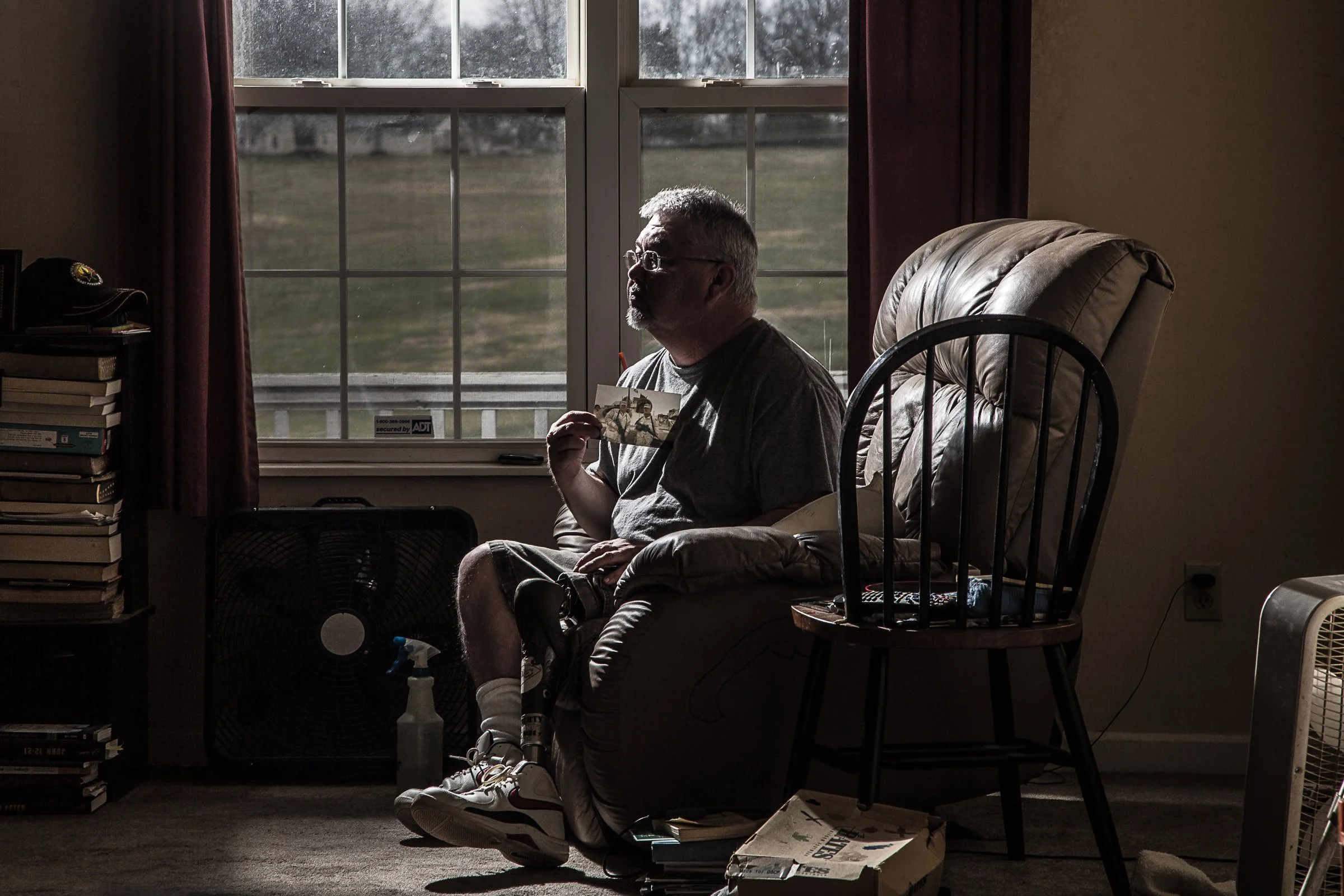
Sergeant David Thomas
U.S. Army | Iraq
David Thomas first joined the Army in 1986, when jobs were scarce in his hometown. Years later, watching the wars in Afghanistan and Iraq unfold on television, he felt compelled to serve again. Although he was older than most recruits, his previous military service allowed him to reenlist.
Thomas served as a cavalry scout in Iraq, conducting patrols through villages and along roads where improvised explosive devices posed a constant threat. His unit traveled in Humvees, often navigating narrow roads bordered by irrigation canals. He remembers long periods of boredom interrupted by moments of extraordinary danger.
On Christmas morning, his patrol encountered a series of roadside explosives. No one was injured that day. Other encounters were not so fortunate.
During another patrol, Thomas noticed burned tires along the road, something soldiers had learned could indicate a concealed explosive. It was the last thing he remembered before the blast.
The explosion caused a traumatic brain injury and severe injuries to his leg. His memories of the evacuation and subsequent treatment remain fragmented. He recalls waking in unfamiliar surroundings, confused and frightened, sometimes believing he had been captured. Doctors placed him in a medically induced coma to manage swelling in his brain.
Infections complicated his recovery, eventually requiring the amputation of his leg above the knee.
At Walter Reed Army Medical Center, Thomas faced the difficult process of rehabilitation. He describes the frustration of learning to walk with a prosthetic leg, the effects of his brain injury, and the persistent nerve pain that continued after his recovery.
He remembers his physical therapist as relentlessly demanding. Although he resented her insistence at the time, he later called to thank her. He came to recognize how much her determination had contributed to his own.
Returning home presented challenges beyond his physical injuries. Ordinary objects along the roadside could trigger reactions learned during combat. He recalls swerving to avoid a cardboard box because, in Iraq, an object like that might conceal an explosive.
Thomas also struggled with the Army's decision to medically retire him. He had wanted to continue serving, but eventually accepted that his military career had ended.
Despite everything he experienced, Thomas expresses no regret about returning to the Army. He speaks with particular affection about the soldiers with whom he served, including three who did not return home.
His interview reveals a man who understands the consequences of military service without allowing those consequences to define his entire life. He remains determined to stay active, continue walking, and resist the temptation to surrender to his injuries.
For Thomas, service meant accepting responsibility for others, even when the cost became deeply personal. His story is one of sacrifice, friendship, and the difficult work of rebuilding a life after war.