
Survey #44: Captain, Steve Snyder-Hill
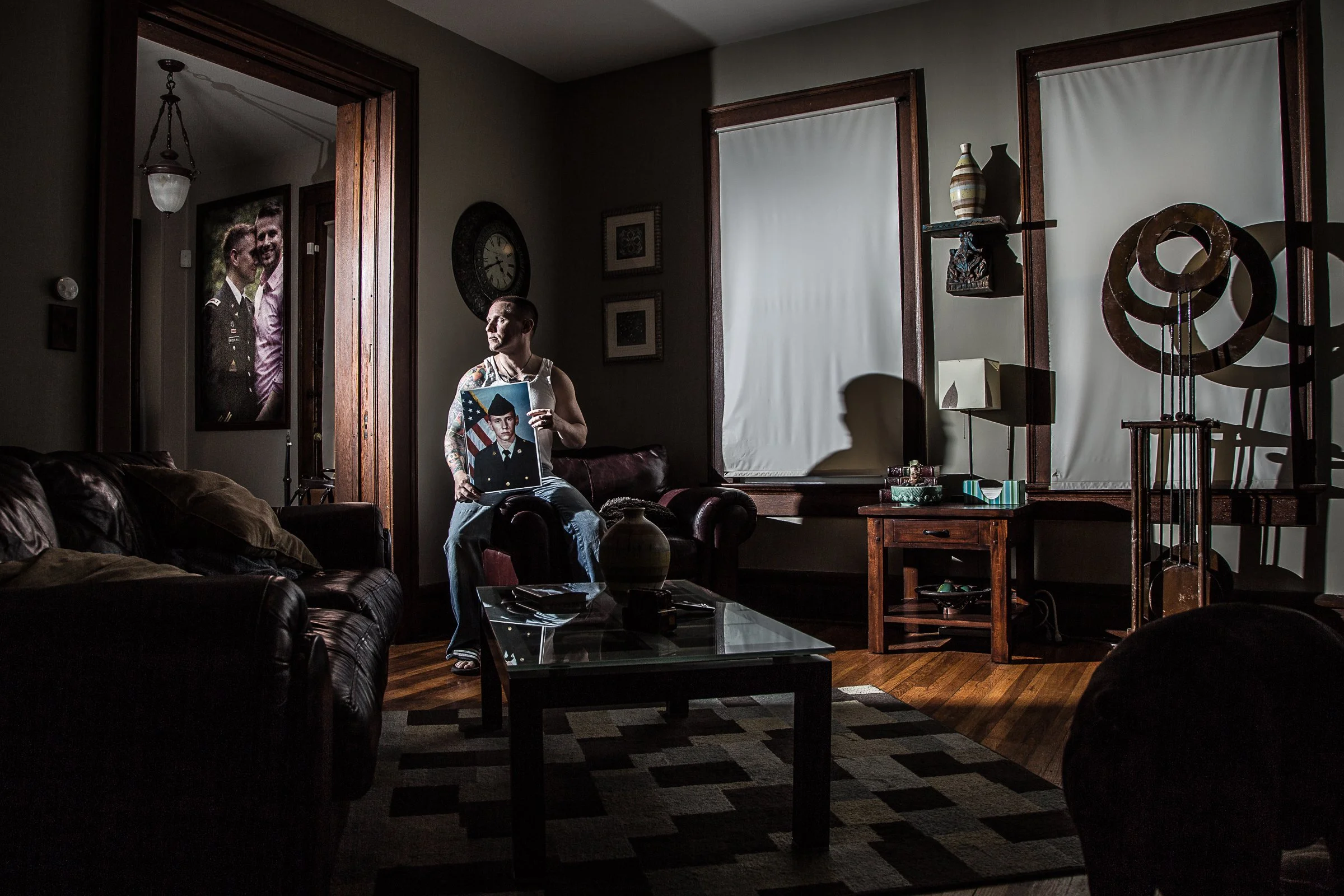
Captain Steven Snyder Hill
Survey #44 | United States Army | Gulf War and Iraq War
Steven Snyder Hill joined the United States Army in 1988, at a time when he was struggling to understand something about himself that he had not yet been able to name.
He knew that he felt different. He experienced periods of depression and found it difficult to explain the distance he sometimes felt between himself and the people closest to him. He had not yet come to terms with being gay.
Military service took him to Germany and then to Iraq during the Gulf War.
During the ground campaign, Hill found himself in a vehicle as artillery shells struck nearby. He believed he might be killed. Looking at a photograph of his brother and his brother's girlfriend, he began to cry, not only because he feared death, but because he realized he had never allowed himself to live openly.
He made a promise to himself that if he survived, he would stop denying who he was.
Hill survived the attack, which he recalls was caused by friendly fire. He eventually left the Army, attended college, and began living openly as a gay man.
At Ohio State University, he became increasingly aware of the history of discrimination against gay people. A photograph he had taken during a visit to Dachau, showing a prisoner's uniform marked with a pink triangle, acquired new meaning for him. The symbol he had seen on contemporary gay-rights materials was also a reminder of persecution and death.
Hill began speaking out against prejudice. When a student newspaper published a hostile comment about gay people, he wrote a response drawing on his experience as a veteran. He had served his country, he argued, to protect freedoms that included the freedom of others to express opinions he found offensive.
After graduating in 2000, Hill missed the military and wanted to put his education to use. He reenlisted in March 2001.
But returning to the Army required him to conceal the identity he had worked so hard to accept.
Under the military's Don't Ask, Don't Tell policy, openly gay service members risked losing their careers. Hill removed identifying stickers from his car and learned to monitor his words, his relationships, and the photographs displayed in his home.
He recalls one evening when fellow soldiers unexpectedly announced that they might visit. Hill and his boyfriend rushed to remove photographs and other evidence of their relationship. When the visit was canceled, Hill was left confronting the humiliation of having to hide his own life inside his own home.
The strain became more severe when he met Josh, the man he would later marry.
Six months into their relationship, Hill learned that he would deploy to Iraq. Josh promised to wait for him. Yet even their farewell had to take place out of sight of the other military families. They hid near a drill hall to embrace, and later beneath an airport escalator to say goodbye before Hill departed.
Other soldiers could openly acknowledge the people they loved. Hill could not.
On the flight overseas, a joke over the aircraft's intercom referenced Brokeback Mountain, prompting laughter among the passengers. Hill remembers feeling isolated from the very people with whom he was going to war.
In Iraq, he continued his duties while concealing his relationship. Mortar attacks sometimes interrupted his conversations with Josh over Skype. Josh had no assurance that he would be notified if Hill were injured or killed.
During a period of leave in May 2011, the couple decided they did not want to wait until the deployment ended to marry.
They traveled to Washington, D.C., and were married on May 3 at the grave of Leonard Matlovich, a decorated Vietnam veteran who had challenged the military's exclusion of gay service members.
The location was deliberate. Matlovich had fought for rights he had not lived to see fully realized. Hill and Josh wanted their marriage to acknowledge that history.
Hill returned to Iraq, where debate continued over the repeal of Don't Ask, Don't Tell. Concerned that political candidates might seek to restore the policy, he submitted a video question for a Republican presidential debate.
At first he concealed his face. When the organizers requested visible identification, he hesitated. Revealing himself publicly could jeopardize the military career and retirement benefits he had spent years building.
He eventually agreed.
During the debate, his question was played and some members of the audience booed. Hill was deeply affected not only by the reaction but by the suggestion that he was asking for special privileges.
He believed he was asking for something much simpler: to serve his country without hiding his husband.
The experience brought national attention. It also encouraged Hill to tell more of his story, including the years of concealment that had preceded the debate.
He and Josh became active in the movement for marriage equality. They challenged obstacles to changing their surnames in Ohio, participated in litigation concerning military spousal benefits, and helped organize a trip for twenty-five couples to marry in Washington, D.C., near the Supreme Court.
The couple also wrote and spoke publicly about their experiences. Hill describes discovering that telling his story could help other people understand lives very different from their own.
One Army colleague who read his book later told Hill that he had never understood the emotional burden of living under Don't Ask, Don't Tell. That conversation mattered to Hill because it showed that change could begin with one person listening.
Hill does not describe himself as the sole author of the progress that followed. He emphasizes the many LGBTQ service members and activists whose experiences and sacrifices preceded his own.
His story connects two kinds of service: military duty and the work of challenging institutions to honor the freedoms they defend.
For Hill, the turning point came long before a televised debate. It began in a vehicle under artillery fire, when he decided that surviving would mean little if he could not live as himself.
Yeah. I'll give you the story here so you can copy and paste it like the others. Same third-person style as Jessica's. Captain Steven Snyder Hill, Survey 44, United States Army,