
SURVEY #16: MILDRED “JANE” DOYLE W.A.S.P.
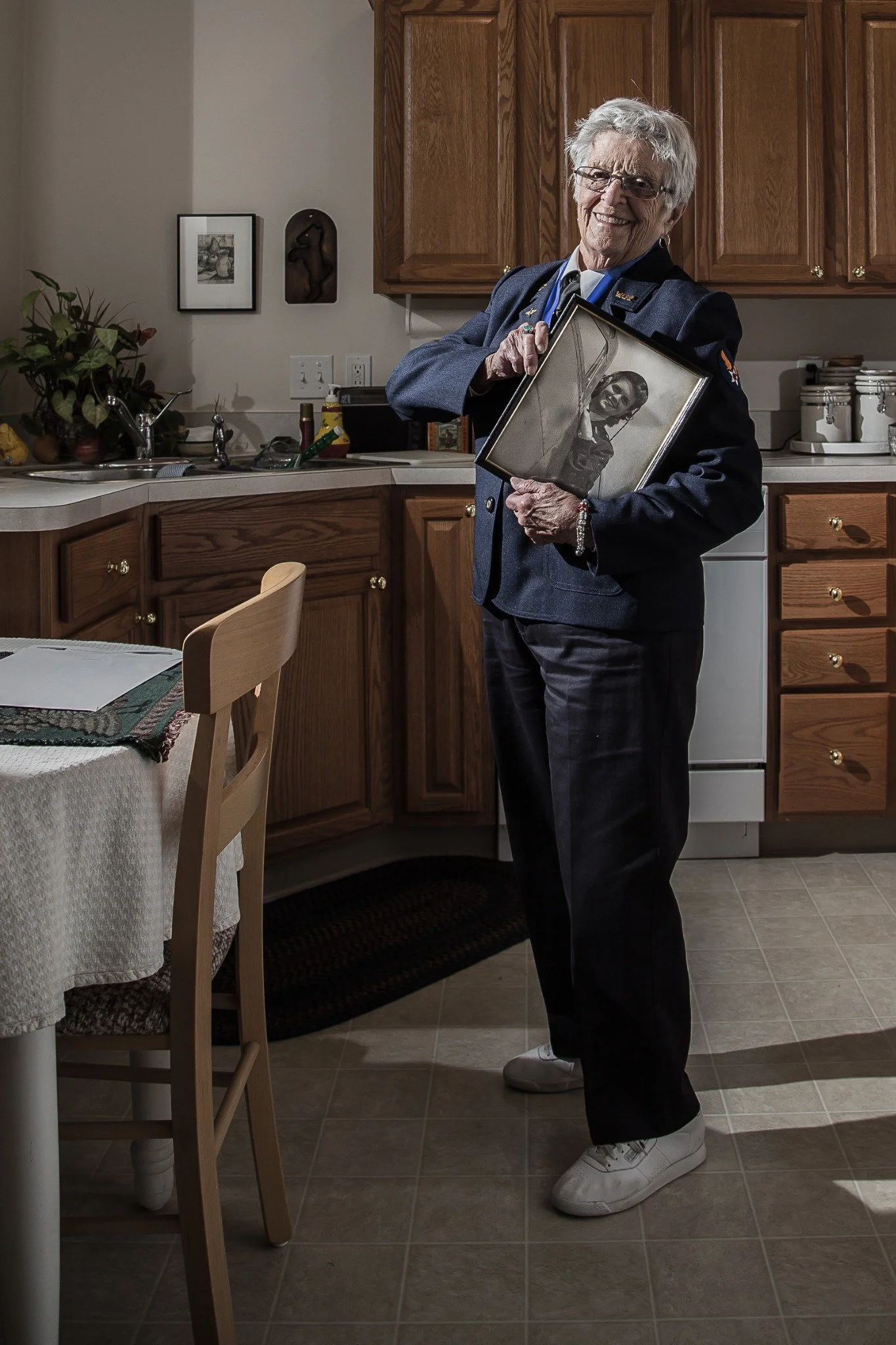
Mildred “Jane” Doyle was flying airplanes before the United States entered World War II. She earned her private pilot’s license in 1939, at a time when opportunities for women in aviation were severely limited. When she attended the University of Michigan, women were excluded from its advanced pilot training program. Rather than abandon flying, she joined the Civil Air Patrol and found every opportunity she could to stay in the air.
When Jacqueline Cochran began recruiting women for a new military flight training program, Doyle was ready.
She became one of the Women Airforce Service Pilots, known as the WASPs, a pioneering group of women who flew military aircraft during World War II. Although they performed essential work for the Army Air Forces, they served as civilians rather than members of the military.
Doyle underwent demanding flight training, including aerobatics and long-distance navigation. She was eventually assigned to an advanced twin-engine training base, where she flew aircraft following engine repairs, investigated mechanical problems reported by cadets, and transported military personnel on administrative flights.
She remembers flying almost every day.
For Doyle, the work was exhilarating. She loved the airplanes and the freedom of flying them. But her enthusiasm existed alongside the prejudice and danger that confronted women pilots.
Male aviators and influential public figures opposed the WASP program, questioning whether women belonged in military cockpits. The women nevertheless demonstrated their abilities in aircraft ranging from small trainers to powerful bombers.
Their service came at a considerable cost.
Doyle recalls losing a classmate in a midair collision shortly before graduation. She remembers another woman killed at the base where she served, and how her fellow pilots collected money to return the woman’s body home with an escort. Because the WASPs were civilians, their families did not receive the military recognition afforded to men who died in service.
In her interview, Doyle also describes aircraft accidents during target-towing exercises and recounts suspicions of sabotage at one base. Those suspicions, she explains, were never publicly resolved.
When the WASP program was disbanded in December 1944, the women returned to civilian life. For decades, much of their wartime contribution remained unfamiliar to the American public.
Doyle remembers how little they spoke about their experiences afterward. Many married, raised families, pursued careers, and moved on with their lives. Their history might have remained largely untold had later generations not begun gathering their photographs, letters, memories, and records.
Recognition eventually came. Legislation enacted in 1977 recognized WASP service for veterans’ benefits. Congress authorized the Congressional Gold Medal for the WASPs in 2009, and it was presented in 2010.
In later years, Doyle returned to Sweetwater, Texas, where she had trained, for reunions and commemorations. On one visit, she climbed into an AT-6 aircraft and was invited to take the controls again. Decades had passed, and the landscape below had changed, but the experience of flying remained familiar.
Doyle’s story is about a woman who broke barriers. It is about someone who loved to fly, answered her country’s call, and helped establish possibilities for generations of women who followed.
As she explains in her interview, flying was a thrill. But she was also serving her country.