
Survey #104 Senior Airman Nathaniel Crawford II
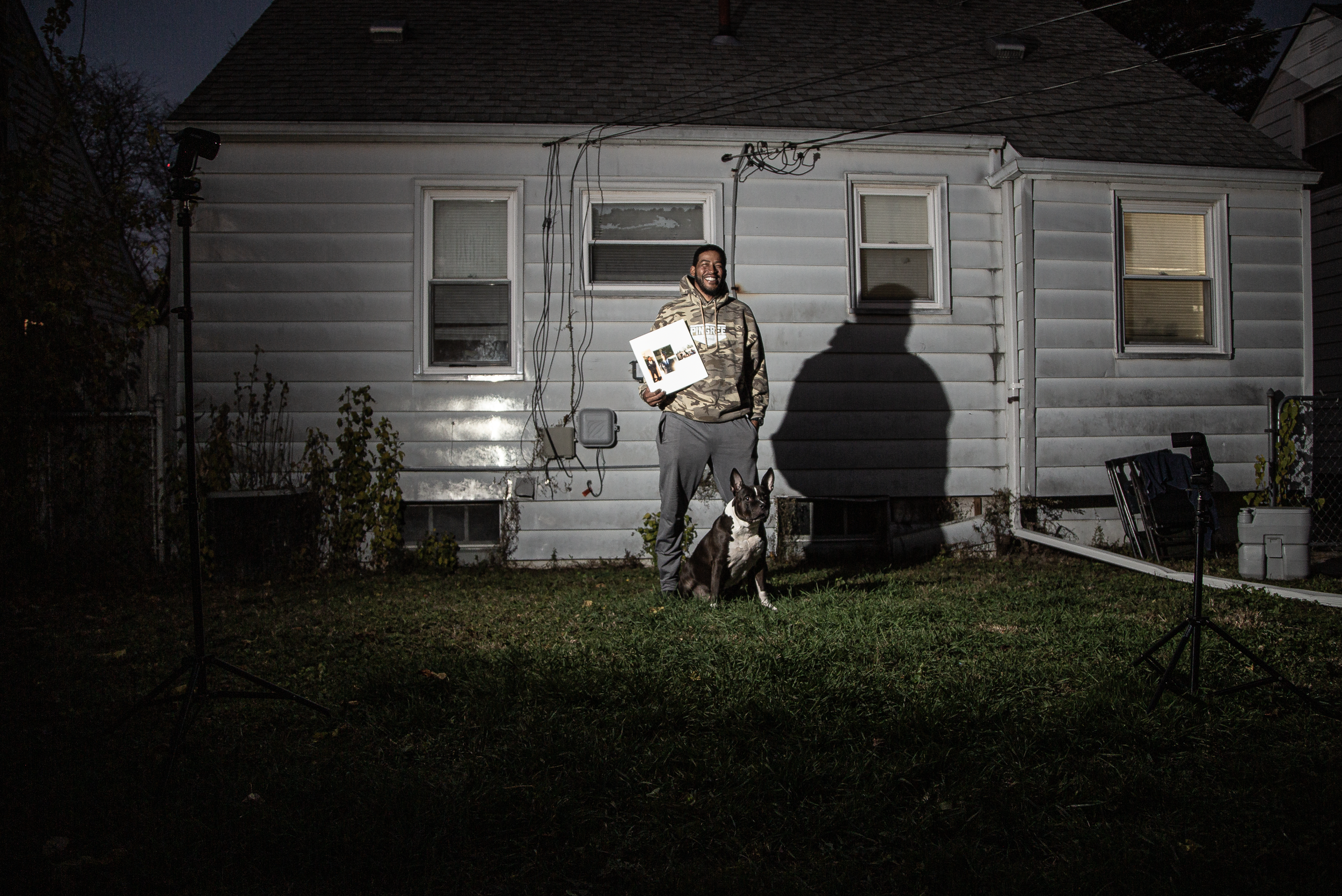
Conduct Becoming: Survey #104
Senior Airman Nathaniel Crawford II
United States Air Force
Nathaniel Crawford II grew up in Detroit, graduating from Martin Luther King Jr. High School in 2001. He attended Wayne State University for two years before deciding to enter the military. His desire to travel, experience other cultures and the events of September 11, 2001, contributed to his decision to enlist. His father was a United States Army veteran.
Crawford's involvement in community service preceded his military career. His mother involved him in numerous community activities, including charity walks, youth athletic programs and distributing holiday gifts to children in orphanages. He also recalls the influence of his youth football coaches, members of Black fraternities who volunteered their time in Detroit.
After scoring well on the Armed Services Vocational Aptitude Battery, Crawford entered the Air Force through its Delayed Entry Program. He completed basic training at Lackland Air Force Base in Texas and specialized in air transportation (2T2X1), a military occupation responsible for the movement of personnel, equipment and cargo.
His first assignment was Dover Air Force Base in Delaware. During the wars in Iraq and Afghanistan, Dover served as a primary point of entry for the remains of deceased American service members. Although Crawford occasionally worked with inbound cargo, his primary responsibility was preparing outbound military shipments.
Approximately five months after arriving at Dover, he received orders to deploy to Bagram, Afghanistan. There, he encountered a shipment bearing a cargo identification placard he had personally prepared in Delaware. He recalls the experience as an opportunity to see the direct results of his work within the military's transportation system.
His duties in Afghanistan included loading and unloading aircraft, sometimes while their engines remained running. He recalls exposure to aircraft exhaust, the presence of burn pits and the restrictions imposed by unexploded landmines remaining from the Soviet occupation.
Following his deployment and return to Dover, Crawford was assigned to Osan Air Base in South Korea for one year. Despite having served in Afghanistan, he recalls feeling more vulnerable in South Korea because of its proximity to North Korea and the possibility of chemical warfare. While stationed at Osan, he also played basketball for the base team, competing against teams from other military installations in South Korea and traveling to Japan for a tournament.
Crawford's final assignment was Andrews Air Force Base in Maryland, where his responsibilities included servicing Air Force One. His duties included cleaning the aircraft, servicing its potable water system and transporting flight attendants. He performed this work on the flight line rather than inside the presidential aircraft's hangar.
He also played basketball for the Andrews base team.
Crawford left the Air Force in 2008, having served approximately four years and nine months and attained the rank of Senior Airman.
Returning to Detroit
Crawford's return to civilian life coincided with the national housing and financial crisis. He recalls difficulty finding employment and identifying resources available to veterans during that period.
He returned to Wayne State University, improved his academic performance and earned a place on the Dean's List. His coursework renewed his interest in politics, government, media and the way businesses operate.
During a period of financial and housing difficulties, Crawford lived in a veterans' housing facility operated by Volunteers of America. The program provided him with an opportunity to reduce his debts and secure housing. He subsequently moved into Lafayette Towers, returning to the Detroit neighborhood where he had grown up.
While working as a security guard along the Detroit Riverfront, Crawford frequently shared his knowledge of the city with visitors. He later worked at Little Caesars Arena, where his observations about workplace demographics, management and the relationship between employers and employees contributed to his interest in business ownership.
Pingree Detroit
In his search for meaningful employment, Crawford discovered Pingree Detroit, a worker-owned cooperative that manufactures products using upcycled leather from the automotive industry.
At the time, the company was expanding into shoemaking and recruiting veterans and Detroit residents for skilled-trades training. Crawford was interested in learning a trade, participating in business ownership and working within his community. He accepted the opportunity despite receiving other job offers with higher pay.
Approximately two years after joining Pingree Detroit, Crawford was traveling downtown on the QLINE with his father to attend a Detroit Pistons game. During their conversation, his father mentioned that Crawford's grandfather had been a cobbler and had repaired his shoes when he was a child.
Until that conversation, Crawford had been unaware of his family's connection to the trade.
Today, Crawford is a co-owner of Pingree Detroit. He describes the cooperative's approach to business as one that considers its workers, the environment and profitability. Its workforce brings together veterans, Detroit residents and individuals from a variety of backgrounds.
Among the company's products are coasters made from upcycled automotive leather and recycled cork and rubber. Crawford notes that Pingree products have found their way into hotels in the Tysons Corner area of Virginia, a place he became familiar with while stationed at Andrews Air Force Base.
Environmental portrait and recorded interview by C.J. Breil.
Conduct Becoming
Recognize · Preserve · Herald